Showing posts with label Spanish. Show all posts

Thursday, September 02, 2010

Central Station


Central Station begins with a shot of several large groups of people pouring out of train carriages and onto the platform at a local train station. The shot is linked to the next scene that takes place on ground level of the station, that being a pouring out of emotions that happens when several people partake in dictating letters to a woman they've never met but entrust to write down what they've said before mailing them off to the chosen address' of loved ones. Just in the opening, director Walter Salles foretells the spilling out of emotion the characters will go through in this film whilst, some might argue, bringing to attention the illiteracy problem that he believes plagues his native Brazil. The opening also goes a long way in establishing the protagonist of the film, a certain Dora (Montenegro), and how she is 'before' the film develops her. Central Station is, essentially, a road movie but it is one of the better road movies that I have ever seen. It is a humbling and thoroughly interesting piece that studies two people of binary oppositions in a situation that consistently pushes weight down on top of a delicate mindset that is possessed by the protagonist.
As a character, Dora is initially unlikable. She spends her days writing out letters dictated to her by illiterate people but rarely posts them to their respective addresses. She is friendless, bar a loose woman named Irene (Pêra) whom visits from the apartment downstairs, and does not have any family or pets. But what makes Central Station so memorable is the gradual changes Dora undergoes in order to become a better person and this is accomplished through the time she spends with a very young boy named Josué (de Oliveira). So the film is a character study, made in a language that is not of the English variety and stretches out to a little bit under two hours. But what brought it its success, I think, is its familiarity in regards to structure, a constantly shifting film that moves on down its single strand arc, effortlessly gliding from location to location and setup to pay-off. The beginning of Dora's transformation occurs not so far from her own door given how many miles she must travel in this film. She witnesses a young boy steal something from a stand before he is chased by security and mercilessly shot in a desolate area near the station.
The initial incident from the outside that interrupts Dora's life, which itself could constitute as the set up, is her acquiring of Josué, when a tragedy befalls him. She figures he is helpless and may need to steal to live, similarly to what the prior, now dead, youth had to do also. The centre of the film revolves around Dora delivering Josué to his father, an address that she acquired a few days earlier when the boy's own mother dictated a letter to her. The character's goal is in a very remote and far off place, too many bus rides and truck lifts away to be reached in a relatively quick time. But complications to do with people having moved on or being missing equate to the two having to trek on to the point where it would be wiser to continue into the unknown rather than just turn back, since a certain point as been crossed. During this time, Dora will undergo a transformation.
The ideas behind the film are perfectly captured by a truck driver, whose words double up as the film's entire study, something the author(s) wants to make quite clear. At one point, whilst driving flat out on the open road, the trucker exclaims that 'the open road has changed him'. Not only this but 'many times' when discussing his job and his experiences with Dora. Principally this is exactly the point. Central Station, being the 'road movie' that it is, allows two or slightly more persons to learn more about themselves as they travel on a continuous route of no return. This is the crux of the film as explained by an individual who is helpful for as long as he needs to be, states what he needs to state before being removed from the text once his kind-natured spirit is brought into repute for aiding in some shoplifting. Additionally, the boy Josué himself brings to both our and Dora's attention Dora's flaws.
If the demonisation of Josué's father is very much present as this uncaring and far away individual, who enjoyed being under the influence of alcohol, then the boy points out Dora bears a similar mindset with her attitudes to alcohol. The statement draws on parallels with the father, as this uncaring and quite solemn individual who doesn't see job through. Then we remember Dora's attitude to all the letters she wrote and to the people she took money off of, while she insulted them in the process. Is Dora any better than the boy's father? Did she ever stop to think of this? Perhaps the father is a better person for at least he, as pointed out by the boy, could mould wood and earn a living out of a skill. While thoroughly engaging and always interesting as interactions and situations are played out, Central Station takes time to develop exchanges and studies like all great, slow-burning character studies do. The film is rewarding in a spiritual, dramatic and emotional sense and it could quite feasibly be labelled as one of the better films to ever come out of South America.

Night of the Sunflowers


Is it actually possible that the Coen brothers, while in the process of scripting a movie like, say No Country For Old Men or Miller’s Crossing somehow got lost in a village in Spain, trading their way out in return for one of their scripts, and that script has made it out today into a brilliant thriller, so reminiscent of their style, only this time at the hands of an unknown Spanish filmmaker, in fact his very first directorial venture?? Jorge Sánchez-Cabezudo seems very denying, though. He could have, with such a prized script approached any big production house and claimed fame to someone else’s ingenuity. Why then, did he decide to start his work from where he finds himself at home, i.e. rural Spain? Why cast a bunch of unknown actors into a promising script? And what on earth made him venture so far out into the desolateness that he claims, is the becoming of the smaller villages within Spain? Perhaps, there lies an ulterior motive in this brilliant script. And perhaps he did, after all script the movie himself. It’s an insult to any American cinephile, who has no conceptual idea that countries across the Atlantic also make movies, and better ones too.

Night of the Sunflowers is not necessarily a character study. We simply have here, a series of unfortunate events that results out of a meeting by chance, between a rapist and murderer, and his next victim. The rapist will try to victimize a young woman, and who she is and where it all takes place play a decisive part in the violent events that will ensue. So this movie has several strong points. One of them is showing how someone completely unrelated to the rest of the main characters of the story, someone who meets one of those people (the young woman) by chance, can be the trigger for all we're about to see. Then, the structure is very attractive too, as the director tries to make full portraits of each important character and show us, not only what they're doing there, but where they come from, in every sense; he shows us what that person is like, their personality and motivations, and what they want, basically; then he drops that character into the spiral of events that have been started by the attack to the young woman, and so comes this suspenseful story, involving two speleologists, the girlfriend of their leader, a very honest and stern old cop and a dishonest, corrupt young one, and two old men who live in an otherwise derelict village.

Jorge Sánchez’s script takes us on a trail of deceit and murder, edging us to rationalize the circumstances in which these incidents take place. We somehow do exactly that, with no remorse as to the consequences, in the light of what we think is significant or obscure. All that rationalization later makes us feel guilty in a brilliant epiphany towards the end. Somehow, the source of all the evil here is shown as what comes with the arrival of outsiders into an otherwise placid village life. The difference between the natives and the townsfolk is so apparent; it’s literally chalked in black and white. On a later introspection, it is exactly this difference which boils down the series of crimes -unknowingly committed- to what is right and what is wrong. Somehow, we find ourselves at the receiving end of a basic moral instinct which we uphold when faced with a more societal setting. And that, according to Jorge Sánchez is a more obstinate, impervious and obscene act than the real crime we see here.

Wednesday, March 10, 2010

El secreto de sus ojos (The Secret in Their Eyes)

Free Image Hosting at www.ImageShack.us


The Secret in Their Eyes fell under my radar after watching the Oscar nominations for 2009. I had watched A Prophet and The White Ribbon and I was interested in seeing how this rather unknown movie competed with these two masterworks.

Juan José Campanella's movie follows Benjamín Esposito's investigation of the rape and murder of a 23-year-old schoolteacher. It's a case that haunts him for decades and comes to define his existence. The movie is temporally fragmented, so the narrative jumps from past to present constantly. I should commend the makeup department for its ability to portray the ageing of actors Ricardo Darín, Soledad Villamil, Pablo Rago and Javier Godino. Without good makeup, this movie would have fallen apart quickly.

Esposito's investigation takes many turns, meets opposition several times, comes to halts several times in the course of his life, ruins his personal life, and seems like it will never be solved. At the age of retirement he begins reminiscing about it and starts writing a novel based on the event.

This movie addresses many topics at the same time: first of all, the craft of fiction, as Esposito struggles to make sense of the events in order to write his novel. But through this inner journey, the movie also discusses the importance of memory. It also explores the danger of obsession, as Esposito comes to realise that decades working on the case has only left him with a lonely, empty life.

All these ruminations are disguised as a crime movie, a rather elegant one at that. The movie plays with genre a few times, the best one being that it reveals who the murderer is before the end of the first hour. By doing this the movie introduces a more interesting idea: what to do with a criminal who's politically untouchable? Is vigilantism ever justified? At times I reminded myself of Mystic River, which posed similar questions, although the stories are totally different.

Ricardo Darín gives a good performance; in fact I have little to complain about the performances in the movie, but Darín stood out as the passionate, tireless investigator. Pablo Rago, who plays the victim's husband, also impressed me for his ability to portray loss so well.

Since I watched this movie because of A Prophet and The White Ribbon, I have to ask myself: is it as good as those two? No, not by a long chance. The Secret of Her Eyes has quality and good ideas, but I never felt I was watching more than a good movie, whereas I consider the other two masterworks. It's worth watching, but it's hardly the masterpiece everyone is saying it is.

On a final note, if this movie deserved another Oscar nomination, It should be for Federico Jusid's score, whose beauty will no doubt get him more exposure soon.

By Eumenides_0 from Portugal

XXY

Free Image Hosting at www.ImageShack.us


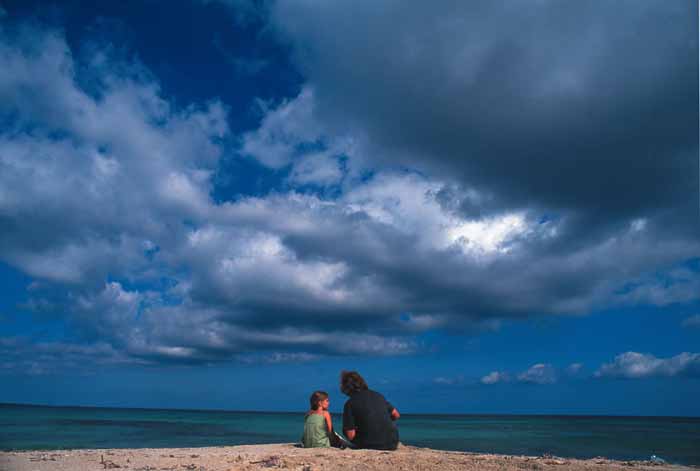
Adapted from a short story by Sergio Bizzio, XXY is the story of Alex (Inés Efron), a fifteen year old intersexual born with genitalia characteristic of both male and female. Argentine director Lucia Puenzo, daughter of Luis Puenzo who directed The Official Story, though tackling a delicate subject has avoided sensationalism while crafting a deeply touching and poignant coming of age story about the pain of growing up without truly knowing who you are. Though minimal amounts of dialog are used and there are long periods of silence, XXY does not come across as being pretentious or strained. Rather it captures the uncertainty and awkwardness of teens with authenticity and awareness.

Alex's father Kraken (Ricardo Darin) is a marine biologist who wants to protect his daughter/son from the stares and questions of society and moves the family to a remote seaside residence in Uruguay. Now that Alex has become a teen, he wants to give her the right to choose whether to lead her life as a man or a woman while emphasizing that he loves her unconditionally and thinks she is "perfect" exactly the way she is and the way she is not. Alex seems to have made her choice by stopping the hormones that have kept her female but her mother Suli (Valeria Bertuccelli) pressures her to decide about surgery by inviting friends Ramiro and Erika (German Palacios and Carolina Pelleritti) from Buenos Aires to stay with them, one of whom is a doctor who specializes in plastic surgery, her invitation being on the pretext that she wants Ramiro to get to know Alex.

Along for the ride is their shy teenage son Alvaro, brilliantly portrayed by Martin Piroyansky who knows nothing of Alex's condition and has some sexual issues of his own. What is not anticipated, however, is that Alex and Alvaro will form an immediate emotional connection, though neither will admit it to the other, and in a beautifully controlled scene, have a sexual encounter with Alex revealing herself by playing the male role. Though the encounter was witnessed by her father, he is not judgmental only perplexed about what his proper role should be in Alex's life, and discusses Alex with a gas station owner who had to make a similar choice in his teens.

Kraken's emotional support stands in sharp contrast with Ramiro. In one of the most gut-wrenching scenes in a long time, Ramiro is unspeakably cruel to Alvaro, telling him that he lacks talent and that, with dripping irony, he is glad he is attracted to Alex since he was beginning to think he was gay. Water symbolism runs throughout the film – Kraken, who is named after a mythological sea monster, rescues turtles from poachers and removes their shell to discover their sex. Alex has an aquarium filled with hermaphroditic clownfish and a collection of dolls with attached penises attached. None of this symbolism, however, adds much to a story that is told with subtlety and great sensitivity.

Winner of the Critics Week Grand Circle Award at the 2007 Cannes Film Festival, XXY features an extraordinary performance by Inés Efron who manages to build empathy for her character while making Alex a symbol of all adolescents' search for acceptance. Director Lucia Puenzo has said that after reading the short story by Bizzio that she "couldn't get it out of her head". A film of haunting beauty and compassion that says that every human being deserves to be loved for who they are regardless of gender, physical deformity, or sexual orientation, it will also be hard to get out of your head.

Friday, March 27, 2009

Carne trémula (Live Flesh)

Image Hosted by ImageShack.us

`Somos un sueòo impossible' sings with her deep and almost inhuman voice Chavela Vargas in Almodovar's film `Carne Tremula'. And this is what this film is all about: a love story, which reaches and overcomes the limits of an impossible dream.

Almodovar, based on Ruth Rebel's novel, creates an imposing, intense film in his own, familiar to us, magical way. The film evolves and revolves around the lives, passions, almost Freudian eroticism and weaknesses of five different (or so they seem) people. The main protagonist is deeply in love with Helena and after a fight in her apartment he is accused of shooting one of the police officers that arrived to `rescue' Helena. Victor is sentenced to six years in prison. When he completes his sentence he finds out that Helena is married to the police officer he was accused of shooting. Victor is having an affair with the abused and desperate wife of the second police officer in order to come closer to Helena. How will all the characters react and interact with Victor's invasion in their lives?

Almodovar brings the characters together, messes their lives, crosses their paths in his own magnificent way. The way that the characters meet, react and interact is based on the principle of coincidence, which hardly is happening by mere luck. On the contrary, the coincidences seem so delicately directed and calculated that it wouldn't be an exaggeration to suggest that the reach the limits of genius.

However, if the primary principle upon the film is based on and evolves around is coincidence, then the second principle should be sexuality and eroticism. The whole film is diffused with intense and deep eroticism. More specifically, images of naked flesh are the primary target of Almodovar's camera. However, the direction is erotic without a trace of vulgarity. The Carne Tremula (Live Flesh in its English translation) appears throughout the film aroused, with powerful hot and warm colours like yellow, orange and red -colours that one feels that they have taken over the whole picture throughout the movie-. In addition, Flesh appears not simply as a material of which humans are made of but also as a projection of people's feelings and desires, as an extension of the inner self. The Flesh is presented so alive as if it has a mind of its own. It is presented warm and wavy, it moves and it comes together in a symmetrical, rhythmic but yet natural way. Moreover, whatever it is enclosed within the Flesh's periphery is following its erotic dance with the same colours, movements and breaths.

Almodovar is creating the profiles of five people, who look so different but then again they are developed on the same basis. All of the characters are moved by one and single thing: their strong, unshakeable and nonnegotiable desire to find and experience love. A love, nevertheless, unspoken, as it is only verbalized by the expression of the Flesh, the intense magnetizisation of two different Fleshes breathing the same air. All of the characters desperately struggle to maintain their other half whichever the means. In this way, the Flesh takes over the Mind and their desire for love becomes an obsession, a sicken passion which destroys their lives. There's no sense of logic and reality when the passion takes over. Feelings are being over-dramatized and the script focuses on the human relationships. Everyone betrays and is being betrayed. And that's exactly what Almodovar wants to highlight. Is it love a desperate voice of fear and loneliness or is it the absolute enosis of the Live Flesh?

When Victor says to Clara that their affair should come to an end she cries out `Please, don't leave me, I won't ask you anything, just let me love you.' The language used in the film is an unshameless and graceful manifest to the human eroticism. This particular modern, everyday language comes in contrast to the non-vulgar and sensual love scenes and even to the traditional erotic Spanish music.

Once more, Almodovar highlights the role of the feminine -a characteristic that is present, apparent and obvious to the majority of his films-, as the whole world seems to unfurl around women. In this movie Flesh is certainly a feminine representation. Moreover, men's actions emphasize women's personalities and characteristics.

The actors fall easily and willingfully into the director's `trap' and follow him to an endless dance of eroticism and passion. Javier Bardem shows excellent moments of talent which are going to certified on his later role choices (including the magnificent Before the Night Falls of Julian Schnabel, in 2000, which brought him broader recognition and many awards.) Liberto Rabal, from the other hand, represents the typical male, almost iconic model, of an Almodovar film, representing fittingly every woman's (or man's one could suggest) fantasy.

The desperate scream of the protagonists is identified with the tragic lyrics of the main song of the film `Somos un sueòo impossible'. We are an impossible dream.

Tuesday, January 06, 2009

Amores Perros

Image Hosted by ImageShack.us

'Amores Perros' is a shocking experience from visionary director Alejandro Gonzalez Iñarritu. It's a difficult film to watch, one which continuously challenges its audience, but a reward in of itself for those who can withstand its brutality. It puts a magnifying glass to the pain of love, and those who are destroyed by it. It gives new meaning to the film title's literal translation, 'love is a bitch'.


In a single moment in time, several lives in Mexico City will be changed forever by a devastating car crash. The film divides itself into three separate segments: representing the past, present, and future. Octavio is searching for recognition and love, but looks in the wrong places. It's a desire that drives him, leading him to make choices in life that will soon haunt him. Valerie, whose life is most impacted by the car accident, finds herself living in a relationship that's crumbling and self-destructing. El Chivo must deal with the absence of his daughter, and the void it's left in his life. He finds companionship in the dogs he picks up off the street, and they soon become the only living things he can connect with. Together, the lives of these individuals will collide in more ways than one. They will find themselves connected by a single thread: love. And the hell that can be unleashed with it.

When I finished watching 'Amores Perros', one of the first things that popped into my mind was why 'Babel' couldn't have been this good. Where 'Babel' lacked in emotional depths and highs, 'Amores Perros' at times finds itself drowning in it. It's a visceral and gritty film, so raw and intense. You may think you've seen it all, but 'Perros' will challenge even those who are rarely phased by cinema. You may find it difficult not to look away at times. Iñarritu's movie has been described as being a 'dog holocaust', and at times I can't disagree. The film's sheer violence is so penetrating and disturbing, it packs a mighty punch. And while this film is definitely not for the squeamish or faint of heart, there's no question that 'Amores Perros' has a tender heart and message ready to be heard. Iñarritu crafts a compelling story from start to finish, which strips down to the bare basics. His ability to capture a piece of the human spirit is wondrous, even if it doesn't always cast us in the best light. It's dark, fierce, and relentless, but nothing short of greatness.

'Amores Perros' features an array of actors and actresses, all of which work wonders in their respective roles. Gael Garcia Bernal is, as always, brilliant. It's a more restrained and less quirky role than many are used to seeing him in, but nonetheless has the rare ability to capture and audience's attention with ease. Emilio Echevarria stars as El Chivo, and delivers a haunting performance as a man who finds himself alone and saddened. It's the weakest part of the film, but is made up for by Emilio's wonderful presence. Goya Toledo plays Valerie, a celebrity crippled by the accident the film revolves around. I found her part in the story to be most interesting, if not for the fact of seeing the life of someone who goes from having it all to nothing at all. There are many numerous performances, too many to cover, but they all lend their talents to create something extraordinary.

'Amores Perros' is an adrenaline rush for its entire running, which tops two-and-a-half hours. It's all a very human and primal film, which can be attributed to Iñarritu's impeccable style and talent. Combining a mutli-faceted story with electric performances, 'Perros' works on many different layers to satisfying results. An original and bold step in film-making, this nearly perfect picture will have you experience a collage of emotions, and invest in flawed characters... all for the sake of love.


IMDB

Tuesday, January 08, 2008

Los Amantes del Circulo Polar (Lovers of the Arctic Circle)


Julio Medem's brilliant films thrive on enigma, obfuscation, tease and irresolution. Lovers of the Arctic Circle is his most playful yet, because it seems his most lucid. There is the usual pattern of proliferating doubles, connection of motifs, bending of time; yet, rather than confuse or complicate like before, each separate entity seems thrusting towards the linear, Unified Whole of the conclusion, which is satisfying in an old-fashioned romantic way, until it too is irreversibly, indeterminately split.
The plot is Medem's simplest yet: two young children, Otto and Ana, are brought together by the affair between their parents which eventually grows into marriage. Otto continues to live with his mother, but increasing love for Ana causes him to move in with his dad so they can enjoy furtive lovemaking. Otto's mother, presumably ins reaction to a double abandonment, commits suicide; depressed, Otto tries to do likewise, fails, and leaves Ana and his family to become an air-messenger pilot. After a failed relationship with an old teacher, Ana goes to Lapland to live in a cabin owned by the father of her mother's new lover. A series of extraordinary coincidences seem to bring Ana back to Otto.
Anyone who has seen a Medem film (Lucia y el Sexo) will know what to expect: surface realistic observation is rejected in favour of an excessive formalism, artifice and patterning that allows access to greater emotional truths. The doubling is astonishing - male/female, mother/father, son/daughter, sister/brother, earth/air, North/South, death/rebirth, lost/found, concealment/revelation etc. Two halves should make one whole, but it never does in a Medem film, leading only to further fragmentation. The two main leads are played by three different actors each, leading to a triple splitting of self which is further underscored both by the permanency of the actors playing their parents, and by the different actors playing them slipping into the wrong time frame, e.g. the young Otto appearing in the adolescent Otto's plot.
Further dislocation occurs in the formal patterning of repetition and coincidence. The same scenes are repeated in different historical moments with different characters. The same events feature different protagonists, depending on the subjectivity of the teller. The main formal device is to have each lead tell in turn the story, but instead of clarifying, this only further confuses, because each sees differently from the other. Medem then undermines this obvious truth by showing a kind of innate bond between Otto and Ana: the palandromic fact of their names, the way each uses the other as a representation of a beloved dead parent etc. And yet again, THIS is denied in the film's most excruciating scene, where, years apart from each other, the two finally occupy the same space at a few feet's distance, on a cafe piazza, and fail to realise.
There is no such thing as a key to Medem, as his labyrinths are Theseus-proof, but the opening credits bear close scrutiny, revealing images of fragmentation - the crashed plane - and rupture, and an intimation of subjectivity that drives the film. Lovers of the Arctic Circle's ending suggests that it is Ana's striving for wholeness, after the ultimate dislocation - death. This reading, though, is questioned throughout - how, for instance, do we account for Otto's voiceover. We are forced to question how much of what we see is, if not literally plausible, than related. Most importantly, it makes us question the past, a history, and how it's told.
Medem's films, especially VACAS, are concerned with the difference between literal history, as told by the winners, and the messy, interior, emotional history of people as they live. VACAS featured a character named Peru, the name of Medem's son to whom TIERRA was dedicated, and who stars here as the young Otto. Lovers of the Arctic Circle is dedicated to Medem's father. The film is obsessed, like VACAS and, to a lesser extent, TIERRA, with family relationships, with tradition and continuity, with a saga that seem linear (generation follows generation) but is actually circular, as the past is continually replayed and distorted in the present.
A crucial subplot here is the meeting of Otto's grandfather with a Nazi bomber during the Guernica atrocity, an act that reverberates throughout the film, and touches, for good or ill, every character. The duality of the film is linked to the duality that split Spain apart throughout and after the Civil War. Another historical layer is linked to Medem's own work, as I outlined above, issues of continuity, which include style, cast, doubling, scenes (especially that of a photographer capturing his family), animals with supernatural powers, unresolved, or a proliferation of, endings; as well as discontinuities (e.g. for the first time, no Emma Suarez).
This is my lesser favourite Medem film, when compared to Lucia y el Sexo. It spends a little too much time in the air - its matrix of meaning is not as grounded in the blood and earth of his previous work. This is probably linked to the acting. In the earlier films the almost naturalistic truth of the actors clashed fertilely with the formal artifice. Here, the callow acting of the leads fails to achieve this, leaving one a little unsatisfied. The older stars are magnificent, though, especially Medem regular Nancho Novo, the loveliest man on film; his OWN abandonment is heartwrenching. There is also a great deal less comedy than previously, again, I fear, due to the acting. These are serious quibbles, but ultimately irrelevant - this is easily the best film around at the moment.

Wednesday, October 03, 2007

Casa de Areia (House of Sand)


As the story opens on the screen we watch a desert-like landscape that seems uninhabitable, and yet, there is such beauty and serenity in the dunes being formed as the wind pounds on them mercilessly. As the camera rests on some dunes in the distance, we watch as a convoy of people and donkeys are moving slowly in the sand. Whatever possessed Vasco De Sa to buy this land, seems to be incomprehensible; that he tries to make a living out of civilization among the shifting sand is just folly!

Little by little we get to know a bit more about Vasco, his wife, Aurea, her mother Maria, as the men he has brought to help him leave them after experiencing the harsh elements in such an arid place. Things aren't made any better when a group of blacks come to see Vasco, who thinks they are going to rob him. He appeases them by giving them some of the things he has brought to this remote place, and we also learn about an island nearby where these former slaves have settled.

After Vasco's tragic death, Dona Maria and Aurea, who is pregnant, are left to deal with the elements. After ten years have passed and Aurea has given birth to her daughter, Maria, she goes exploring and discovers a camp where foreign scientists are making astronomy studies. After a night with Luiz, she goes back for her mother and daughter, but finds her house in ruins after the shifting sand has crushed part of it. Only the young Maria survives.

The kind Massu, on of the black men from the island, has loved Aurea from afar. Fate and circumstances bring them together by a bond that goes beyond all reason. After years have passed, Maria, who is now a grown woman discovers Luiz, who has returned to the area, not knowing what role he had played in her mother and her lives. Aurea tells her daughter to go with Luiz back to civilization, but Aurea has no desire to see a world she can't comprehend anymore.

This exquisitely told story by director Andrucha Waddington is one of the most beautiful films that have come from Brazil in quite a while. The screen play by the excellent Elena Soarez, whose work one has admired as well, collaborates with Mr. Waddington once more in this strange, but highly moving picture about isolation, loyalty and folly. The wonderful cinematography by Ricardo Della Rosa makes everything one sees even better, if that's possible. The magnificent desert location and even the eclipse his camera captures fills one's senses like no other film in recent memory. Joao Barone and Carlo Bertolini's music score is another element that works with all we are watching.

Of course, the film belongs to the two magnificent actresses at the center of the story. Fernanda Montenegro and her real life daughter, Fernanda Torres, make a great contribution to create these women of the desert. Fernanda Montenegro is seen as three different versions of the older women in the story and Fernanda Torres plays the young Aurea and the grown up Maria, the girl that was born in that remote area. Ruy Guerra, himself a distinguished director, plays Vasco with conviction. Seu Jorge, Stenio Garcia and the rest of the cast contribute to make this film work.

It's curious to note some negative comments mainly from postings by Brazilian contributors to IMDb. The film, which was received with bad reviews, in general, from the media in that country, deserved much better. It's also curious that viewers from other areas get a different message and pleasure after viewing this film.

Sunday, November 19, 2006

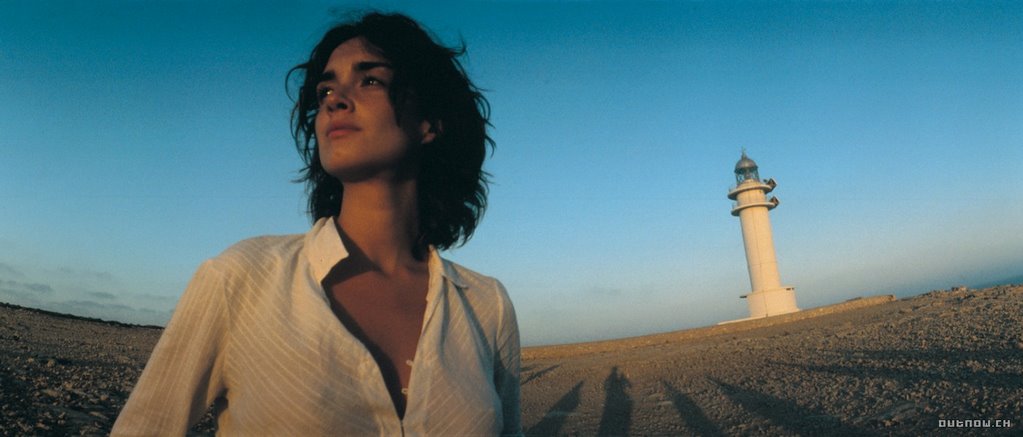
Lucia y el Sexo


Lucia y el Sexo is one of those films that aims to confuse. Just when you go down a rabbit-hole of confusion... literally. As perceptions begin to form effortlessly about every movie I watch before I even get my hands on it, I promptly hesitated on the verge of seeing this movie especially when it comes with this -> NC-17, The reviews I read were anywhere but between the extremes- either they call it a blundering erotic rollercoaster (the anglais speaking world), or its the opposite: a timeless work of art and creativity (the cinema-loving world). Some call the director Julio Medem one of the most "earthiest" in a country noted for its hearty cinematic eroticism. But one thing was evident: there definetly is going to be a lot of disturbingly erotic sequences in this insanely layered story. My previous encounter with such levels of endless, unforgiving, graphic imagery was when I watched Michael Winterbottom's 9 songs that left me, say quite unbalanced. But that was for a reason- I never managed to follow any plot whatsoever in it. Not even till today. That's not the case when it comes to Lucia y el Sexo. In fact the story is what is more captivating and excellently executed than all those wild moments in this movie that can cause that oh so familiar rush of blood to.. Thats what I inferred from the reviews and believe me, I was correct! At the end of the day it's up to the viewer what to make of it all. I happened to see an english dubbed version on abc last week. I think i'll download it right away..

"I'm sorry for everything I said when I left," a pretty young waitress whispers into a pay phone at the back of her restaurant in the opening scene of "Lucia y el Sexo." Regret and apprehension resonate in her voice. Her body is both tense and tired, not from too little sleep (although that's probably a part of it) but from the fatigue of having strain she can't resolve in a relationship that has been the most important thing in her life.

All of this is evident within seconds of this girl's presence on screen, so it's no wonder the composed yet sensual and expressive Paz Vega won a Goya (Spain's Oscar) for this performance. She goes on to cover a remarkable range of emotion, strength and vulnerability as the lovely Lucia, who by the end of that phone call has sensed desperate despondency in her already deeply-troubled lover. She dashes home to find a disturbing farewell note just as the phone rings with a call from the police expressing regret about an horrible automobile accident....
Lucia hangs up in the middle of the call, hastily packs a backpack and runs away to the only place she can think of that might put her heart at rest -- an island off the coast that Lorenzo (Tristan Ulloa), her lover, had always talked about but never taken her to visit.

Adept at plumping the depths of love and loss, "Lucia y el Sexo's" writer-director Julio Medem ("Lovers of the Arctic Circle") also has a talent for entrancing visuals and a penchant for extraordinary twist of fate. At the same time that Lucia is reaching the island -- a parched Mediterranean paradise of crystal blue seas and rocky cliff tops, photographed in transporting, heat-baked, sun-bleached colors -- Medem flashes back to six years before, when Lorenzo spent his 26th birthday on the island, making love in the ocean to a local girl with whom he didn't exchange names.

Completely unaware of the connection, on her solace-seeking trip in the present, Lucia befriends this same woman, a seemingly free spirit named Elena (Najwa Nimri from "Arctic Circle" and "Open Your Eyes") who is, in fact, also hiding from the memory of a personal catastrophe.
Medem then intertwines Lucia's emotional convalescence with the histories of all three characters in a heart-catching, hair-pin-curving narrative of circumstance, coincidence and destiny. Young Lucia's giddy, unorthodox seduction of Lorenzo -- a novelist she admired so much she resolved to make him fall in love with her -- is part of the story, as is their passionate, sexually adventurous love affair. Lorenzo's fortuitous discovery that he has a daughter -- a fact he withholds this from Lucia -- and a terrible tragedy that is an indirect result of this knowledge, sends the haunted writer into an emotional tailspin that begins to bring the film's themes full-circle.

Profound performances by Vega (who looks like a younger, fresher, more pithy Penelope Cruz), Ulloa and Nimri give the film such a compelling intimacy that it feels as if the emotions are wafting off the screen. This is especially true of the many carnal love scenes as if Lorenzo and Lucia. Bee-stung pixie Elena Anaya -- another Goya nominee for the film -- also makes an unforgettable impression as the little girl's babysitter, a sexual siren who ensnares Lorenzo as he tries to bond with his child surreptitiously.

At times Medem over-reaches in his quest for empathetic intensity. A character-establishing peripheral storyline about the babysitter being turned on by watching old porno movies starring her mom is excessive and ultimately unnecessary to the plot. The film is not well served by an on-camera birth scene that leaves nothing to the imagination. One more complaint: Because the audience is privy to connections that the characters are not, the last act drags a little while we wait for the other shoe to drop.

But the captivating psychological journeys in "Lucia y el Sexo" -- which contain far more intricacies and surprises than I've described here -- and Medem's remarkable, metaphorical filmmaking style make it possible to overlook such impediments and just let the picture's potency wash over you like the warm Mediterranean waters.

Courtesy of RB, whatever he/she is...

Monday, September 04, 2006

Mar Adentro


When you can't escape, and you constantly rely on everyone else, you learn to cry by smiling, you know? -Ramón Sampedro

I had the privilege to watch Mar Adentro last Saturday, and I am still shocked by its beauty, the powerful work of every single actor and actress and Amenabar's unbelievable ability to narrate the story of Ramón Sampedro, who was well known in Spain for asking for a legal euthanasia, lost the court cause, and eventually died in front of a camera drinking a glass with poison, freezing all our hearts with his determination not to go on living forever immobilized because of an accident.
Before watching the movie I was already mesmerized by the strong symbology in its title, which I would translate as "Into the Sea" and which is taken from an original poem written by the man this story is about. Then I watched the movie. Oh my friends. This is Cinema with a capital C. The narration flows to take you to the heart of every single character: Sampedro, reincarnated in a Bardem that you forget from the very beginning, is in the center as a man full of sense of humour and full of hope, and his hope is to die, because for him, the life he is living is not worthy to be lived. The rest of the characters but one dance around him and respect his decision because they see him as a human independent being (forgetting he depends on the others for everything), even though they do love him so much. And this is what the movie is about: love. You can feel it, you can breathe it in the skin of every character. You witness the growing of the feeling within three women who meet him in the movie: Gené, the member of the association that defend his right to die with dignity, his friend, her story in the movie is the hope for us the lucky ones that can live a normal life in this world; Rosa, the woman who meets a good man in the middle of her list of broken relationships and pain in the hands of all the men who used her and despised her; Julia, the woman who shares a tragic destiny with Ramón, and eventually acts in a way we cannot but only understand.
However, before meeting these women Ramón knew what was love like, because you cannot meet him without loving him, and he is deeply loved by his abnegated family: Four characters unique in their humbleness and bravery, each with their own thoughts about his decision, each thought respectable in its own way, because the terrible thing about this story is that nobody is to blame for what happened. That, sadly, life sometimes is that terrible. From this familiar quartet I specially liked Mabel Rivera's work as Ramón's sister in law, Manuela: a terrific performance.
I would like to draw attention to three episodes that are for me the best climax points I have seen in a long time, and if you haven't seen the movie don't read this, pass over this paragraph and read again from the next one starting "Mar adentro", let the movie show its secrets to you. Three episodes I loved were: 3. The best love scene I have seen in a movie, when I really felt love invading the screen, is when Ramón dreams awake that he is flying to meet Julia in the beach and they kiss each other. 2. Gené speaking by phone with Ramón, the day before he is going to do it, and he tells her it is better they say goodbye at that very moment, not to put her in trouble with the authorities. And then she knows it is the last time they are going to talk, and she has fought for his right to die... but she does not want to lose him, because she loves him as a true friend, and even though she is respecting his decision at all cost. 1. The best. A young Ramón in the beach, looking at his girlfriend under the sun, jumping to the water from the rocks to a sea that is retreating. We see the crash, we hear his voice recalling what happened and claiming he should have died that very moment. The face of Bardem, face downward, shown to us from the bottom. And the hand of a friend who pulls him from the forehead and brings him back to a life that will be a hell for him in the next 30 years. There are many others, like the impressive ending, in spite of the fact that in Spain we know too well what Ramon did.
Mar adentro did not deceive me, but the director has to thank the actors that took part in the project, and who maybe took it personally, because this is not just a movie, it is an elegy to a man who died alone when he was asking to die "legally", which meant for him, as Bardem pointed out, dying with the people he loved and who loved him around.

Sunday, July 16, 2006

The Motorcycle Diaries

One of my first insights into spanish cinema, I dunno how i missed out on writing a review for this! There is none to compare this movie with. Certainly one of the the best i've seen.

THE MOTORCYCLE DIARIES is certainly one of the finest films of the year - a daring, compassionate re-creation of the journey of two young, well-to-do Argentinean lads who leave their privileged positions of biochemist and fourth year Medical student to follow their idea of traveling by motorcycle from their native Buenos Aires down to Patagonia, up through Chile, Peru, Colombia to Venezuela. Sounds like a light hearted Trip Movie, but instead this journey, factually made by one Ernesto (aka 'Che' and 'Fuser') Guevara de la Serna and his close friend Alberto Granado ('Chubby'), is one of the most touching and sensitive passages into self acceptance and awareness of the world as a place where equality of people is a microscopic speck of illusion that is revealed by a carefully constructed script by Jose Rivera based on the diaries of both of these men made during and after their journey. Walter Salles ("Behind the Sun", "Central Station") once again proves himself a director who can infuse his vision of a story with uncomplicated directness of approach, having the sensitivity to allow his well-chosen actors to create wholly believable, three-dimensional characters, whether the actors are the leads or simply minor roles that hold the camera's eye for seconds.
Taken as simply a movie to enjoy, THE MOTORCYCLE DIARIES is as beautiful as a National Geographic Magazine feature on the Amazon and the deserted and populated lands of South America. But given his re-creation of Che Guevara's and Alberto Granado's meaningful excursion into manhood this movie goes far beyond entertainment and enters that rarefied arena of psycho biography. Traveling on an old motorcycle, the two lads encounter hunger, accidents, lusting after women at every stop, ingratiating panhandling, and the gradual revelation of the quality of life of the indigenous peoples of South America. They are touched by the plights of the people, the people in turn love the boys, and they eventually spend three weeks living and working in a leprosarium run by the nuns, adding their knowledge of medicine to helping not only the physical needs of the lepers but finding ways to break the psychosocial ostracism that historically curses the 'unclean'. Breaking down these barriers, forming strong relationships with those tending the lepers as well as the lepers themselves, lays the seeds of 'revolution' or Change in the minds of the lads, especially Ernesto or 'Che'. The lepers in this movie, I think are the most emotional and moving characters ever, EVER shown on film. The film does not begin to preach or to make the Che Guevara of Cuban militancy fame a hero: it doesn't have to, as the transformation in the mind of Che is so beautifully subtle. The journey has given him the insight that he must devote himself to changing the inequality and poverty of his America. The events that followed this Motorcycle journey are provided in voice over, black and white footage of people's faces, and a final scene in Havana at the ending of the film. No more need be said. Gael Garcia Bernal gives an incredibly thoughtful, stunning portrayal of Che, saying so much more with his eyes, his body language (especially as he suffers through his own physical demon of asthma attacks), and his perfect embodiment of the spirit of a man who becomes enlightened by the peasants he comes to love. Bernal is already a brilliant actor and a magnetic screen presence, and if he is not nominated for an Oscar for this unique, artful role it will be a major surprise. His is a career to watch! Likewise Rodrigo de la Serna is completely immersed in his role as Alberto and shows the same quality of quiet growth as a character as the movie progresses. ALL of the many extras in this huge cast are memorable: the leper colony abounds with some of the most touching human beings ever captured on film. The camera work, the musical scoring, the obvious commitment on the part of everyone involved in this glorious picture - every aspect of THE MOTORCYCLE DIARIES is exactly right. In Spanish with English subtitles